In the first 72 hours after a burst pipe, shut off the water, make the area safe, report the loss to your insurance company, photograph everything before you clean up, and get the structure drying. Drying is the step with a clock on it. The EPA says to dry water-damaged areas and items within 24 to 48 hours to prevent mold growth, and every other step on this list is about protecting your claim while that happens.
We are licensed public adjusters in Glendale, and this is the order we would work through it with a homeowner standing in a wet kitchen. The photos below come from real burst pipe and supply line claims we handled, including ones in Glendale, North Hollywood and Lancaster.
The first 72 hours at a glance
- Right away: stop the water and make the area safe. Shut off the water, stay away from electrical hazards and move what you can out of the wet area.
- First few hours: report the loss. Call your insurance company, get a claim number and keep a log of every conversation.
- Before you clean up: document everything. Photos, video, the failed pipe or line and any moisture readings.
- Within 24 to 48 hours: get the structure drying. Standing water out, air movers and dehumidifiers running, wet materials assessed.
- Days two and three: sort out contents and costs. Separate damaged belongings from undamaged ones, keep every receipt and arrange somewhere to stay if the home is not livable.
Every policy is different, so read yours or ask your insurer for a complete copy. What follows is general guidance for California homeowners, not a coverage opinion.
Hour one: stop the water and make the area safe
Shut off the water first. If the failure is on a single fixture or appliance line, such as a dishwasher, washing machine or toilet, the small valve on that line may be enough. If you cannot find it or it will not turn, close the main water shutoff valve for the house. It is worth locating that valve before you ever need it.
Then think about electricity. Do not walk through standing water if outlets, cords or appliances are in it. If water is coming through a ceiling light fixture or has reached the electrical panel, stay out and call a licensed electrician or your utility. If the line that failed carries hot water, be careful around the water and the steam.
Once it is safe, take the simple steps that limit the spread. Pull up rugs, lift furniture off wet floors, move electronics, papers and valuables to a dry room, and mop or vacuum up standing water if you can do it safely. Keep damaged and undamaged belongings apart. California's standard fire policy asks the insured to separate damaged and undamaged personal property, and it is a good habit on any water loss.
Call a plumber to repair or replace the failed line so the water stays off. Ask for an invoice that says what failed and where. It belongs in your claim file.
Call your insurance company early and protect the property
The California Department of Insurance tells homeowners to report water damage right away, so the company can discuss what type of water or mold damage the policy may cover. Its claims guide also warns that a homeowners policy may not cover further damage if you did not take reasonable steps to protect the property. California's standard fire policy says the same thing in legal terms: give written notice of a loss without unnecessary delay and protect the property from further damage.
When you call, get the basics down:
- The claim number and the name and contact details of the adjuster.
- What the company needs from you, and by when.
- Written confirmation of anything important. Follow phone calls with an email, and keep copies of everything you send and receive.
- A simple log with the date, time, who you spoke to and what was said.
California also sets deadlines that insurers have to meet once a claim is reported, including 15 days to acknowledge it. We explain them in how long an insurance company has to pay your claim in California.
Department of Insurance consumer guidance says to make temporary repairs to prevent further damage, take pictures and keep records of all cleanup and repair costs, and hold off on permanent repairs until the insurance adjuster has seen the damage. The Department of Insurance's claims guide also says insurers will reimburse you for all reasonable costs to protect your property, and that payments for temporary repairs are part of the total loss settlement. Pulling out standing water and starting drying equipment is the kind of protection a policy expects, so keep the invoices.
Document the damage before you clean up
Photos taken before anything is moved, cleaned or thrown out are the best evidence you will have. Aim for:
- Wide shots of every affected room, then close-ups of floors, walls, ceilings, cabinets and baseboards.
- A slow video walk-through where you say out loud what you are seeing.
- The burst pipe or supply line and the area around it, before the plumber removes it. Ask the plumber to keep the failed part.
- Damaged belongings, photographed before you discard anything. List each item as you go, with its age and roughly what you paid.
- Any moisture readings or thermal images, with the date.
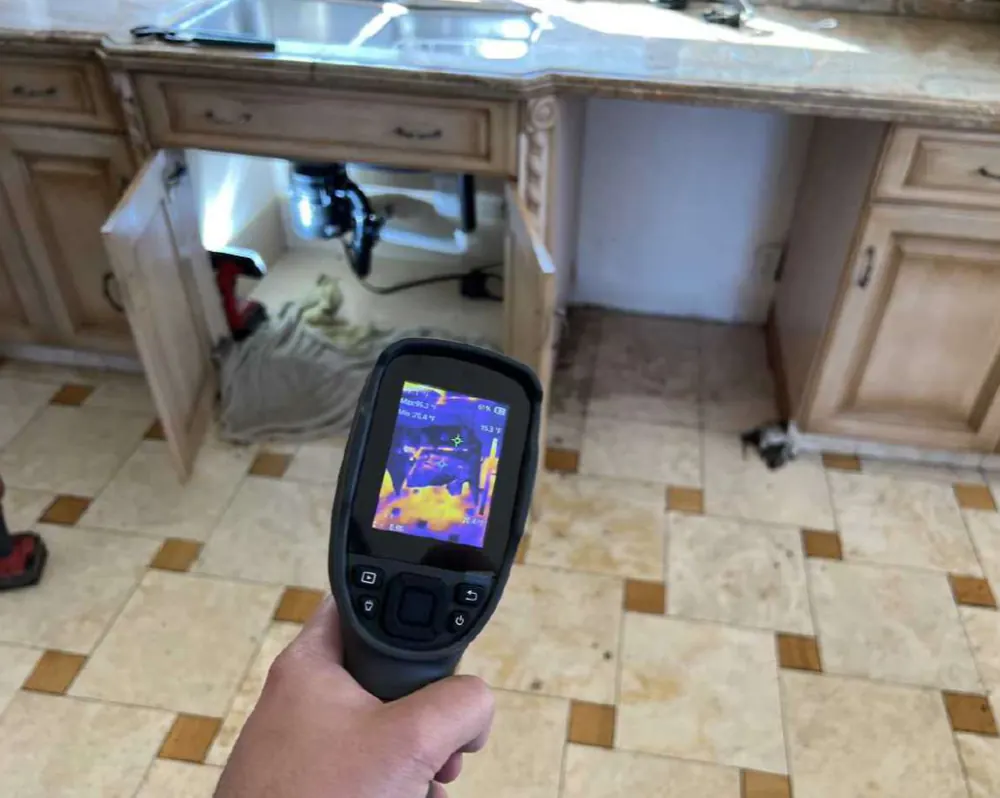
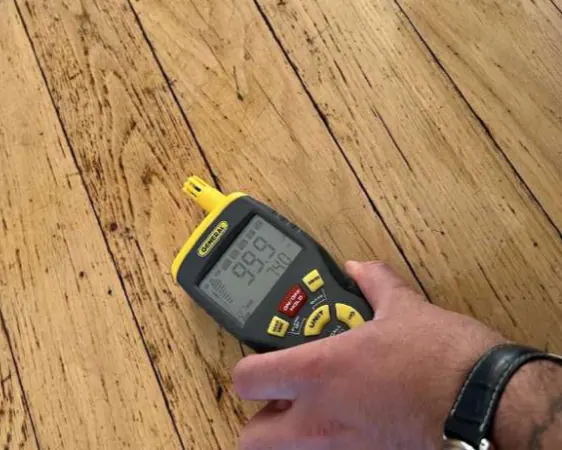
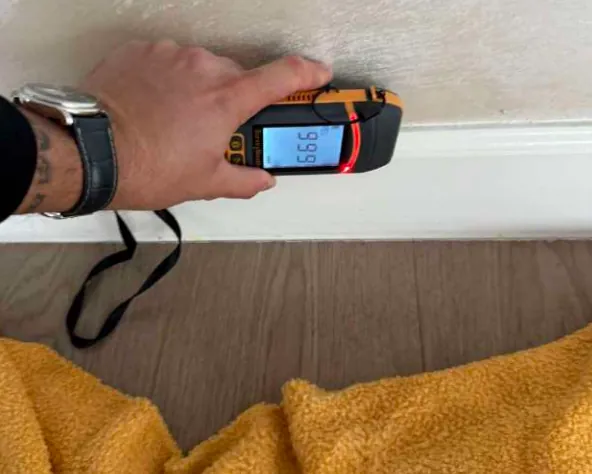
Water rarely stays where you can see it. On our Glendale claim, a hot water supply line behind the dishwasher burst and sent water across the main floor and into the basement. We used a thermal camera and a moisture meter to follow it through both levels and wrote down the readings, so the full extent of the damage was on record.
Water you cannot see: behind walls and ceilings
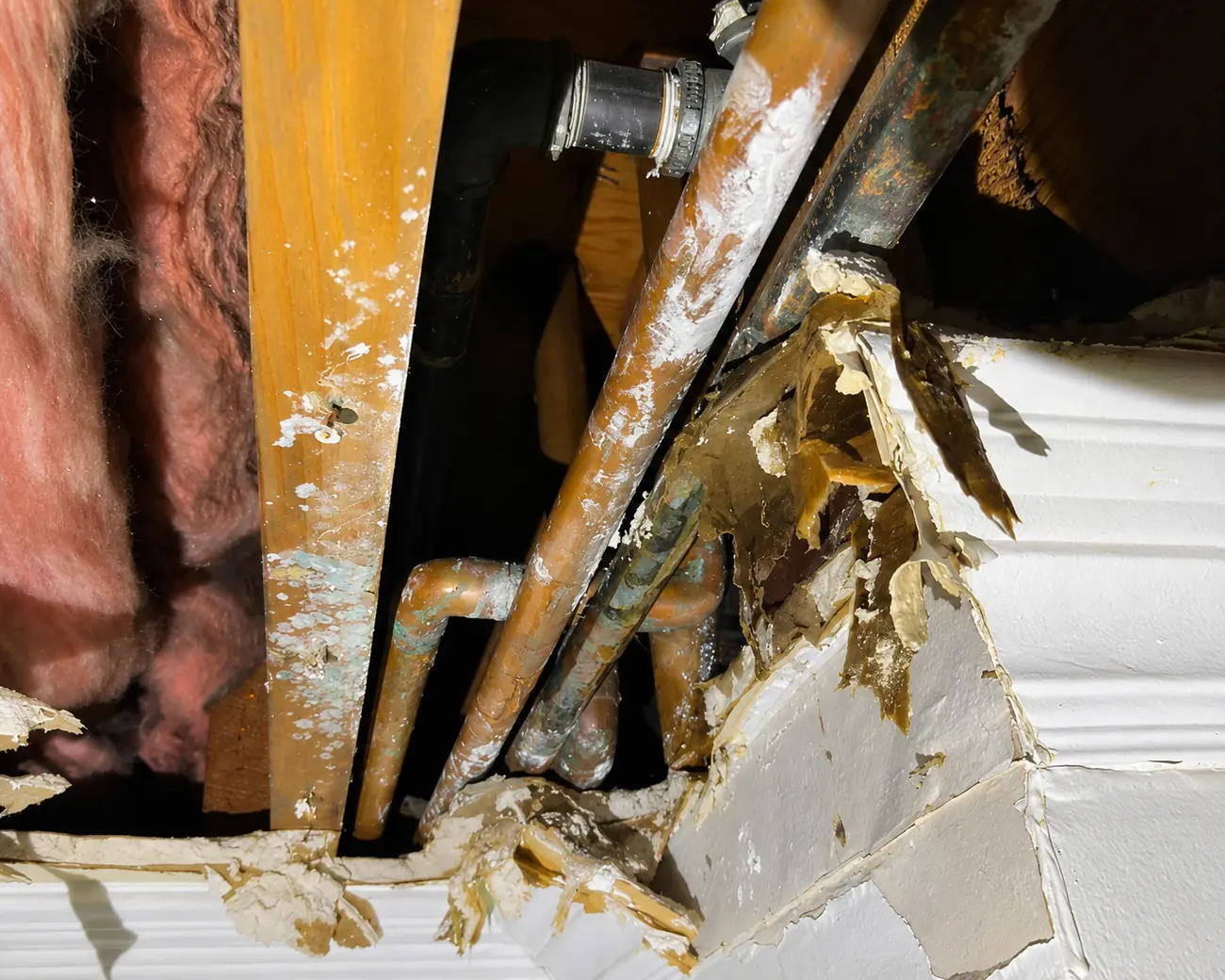
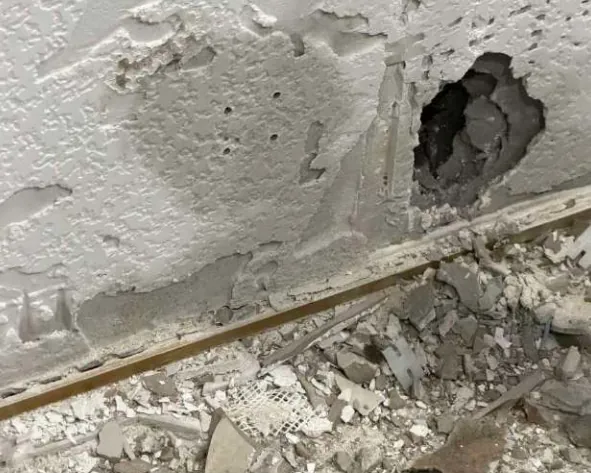
Some burst pipes never show themselves. In North Hollywood, a cold water copper pipe failed inside a master bathroom wall. The first signs were stained floors and moisture readings, which tell you water is present but not where it is coming from. A detection company pinpointed exactly where the pipe failed, so the wall could be opened in the right spot instead of cutting around and hoping.
On that claim the plumbing access work was paid as its own check, and it was the first payment on the file. Many policies pay to open walls and floors to reach the source of a covered loss but not to fix the pipe itself, and the wording varies, so ask your insurer how yours handles it.
Get everything drying within 24 to 48 hours
This is the part of the first 72 hours that cannot wait. The EPA's guidance is plain: dry water-damaged areas and items within 24 to 48 hours to prevent mold growth, and in most cases mold will not grow if wet or damp materials are dried in that window. For wet carpet and backing it recommends removing the water with a wet vacuum, running a dehumidifier and using fans to speed up drying. The EPA also says that, depending on the size of the area, professional help may be needed to dry it quickly and thoroughly, and that sewage or other contaminated water calls for a professional with experience in cleaning up contaminated water.
For anything beyond a small spill, that usually means a mitigation company with air movers, dehumidifiers and moisture meters. On the ceiling pipe claim shown below, water spread through the ceiling cavity into the living space and the job needed both emergency mitigation and a full rebuild.
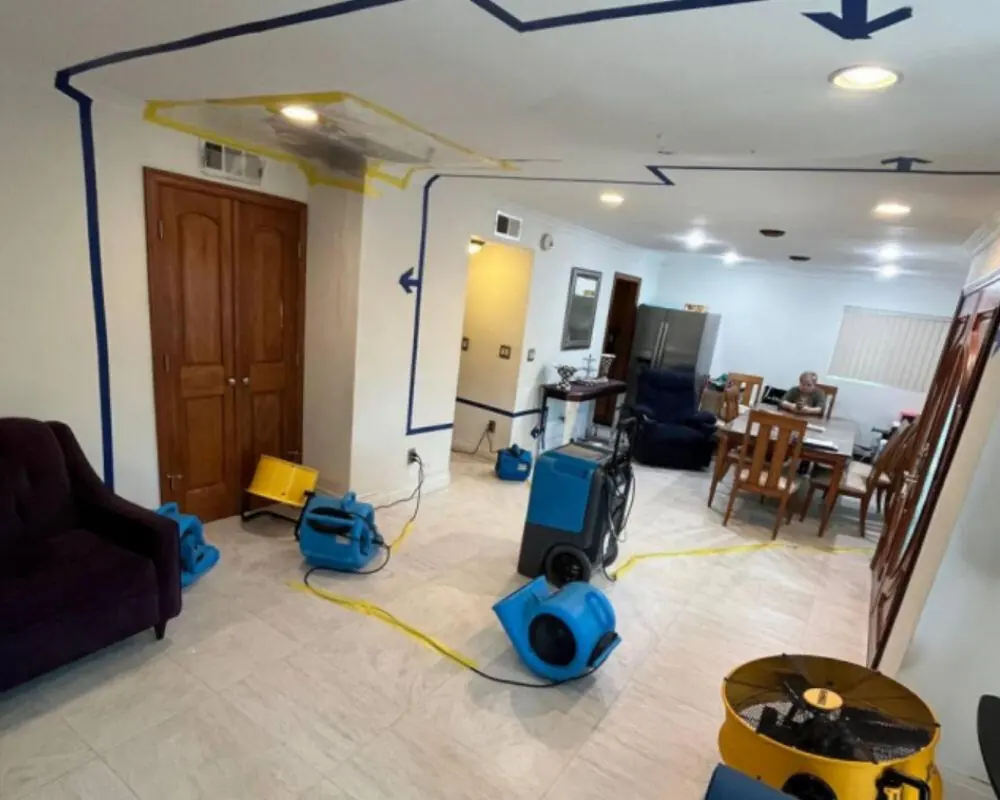
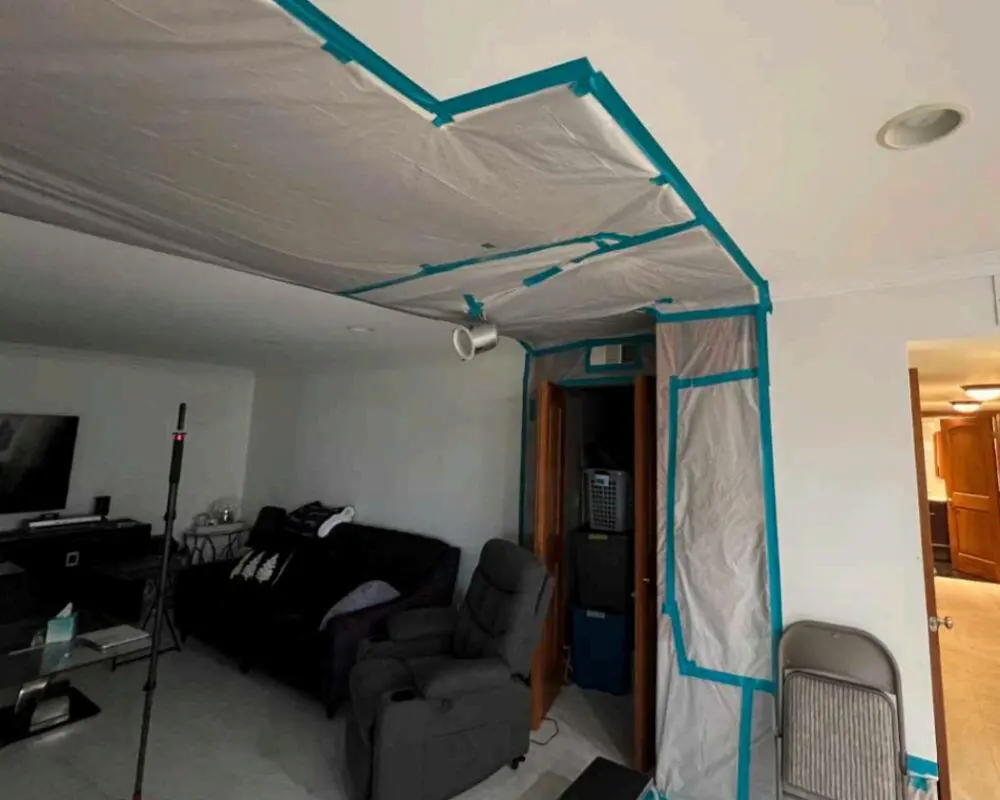
Emergency mitigation is a real part of the claim, not an afterthought. On our Glendale claim it was $25,000.00 of the $323,191.28 recovery, and on the ceiling pipe claim the mitigation contractor was paid $16,000 for emergency services. Those are examples from two claims, not what yours will cost.
You choose who does the work. California's claims regulations say no insurer shall require that the insured have the property repaired by a specific individual or entity. If your insurer suggests a company you can still use your own. Whoever you hire, ask for moisture readings, photos of where the equipment was placed and a written invoice, and keep them with your claim file.
Days two and three: contents, a place to stay and costs
Keep sorting damaged belongings from undamaged ones, and keep your list and photos current. When belongings have to leave the house during repairs, packout and storage can be part of the claim. On the Glendale claim, packout, packback and storage was its own payment of $35,030.72.
If the home is not safe to live in, the Department of Insurance advises keeping receipts for all relocation expenses, such as emergency shelter, clothing and food. Those extra costs may be covered under the loss of use portion of your policy. The North Hollywood family moved out during demolition, the carrier approved the move and it issued monthly additional living expense checks. On the Lancaster claim, rent payments were repeatedly late or had to be reissued, so we tracked every month the family was displaced. How much you can collect and for how long depends on your policy.
If the adjuster brings up mold on the first visit
In April 2024 a dishwasher supply line burst in a Lancaster home. Water spread through the kitchen and into surrounding rooms, and the family had to move out. During the first inspection the carrier's adjuster said there was mold near the dishwasher and used it to question coverage and delay the claim. No proper mold testing supported that position.
We reviewed the affected areas and showed the condition was not mold. Photos, documentation and expert input showed the damage matched water from the burst supply line, and the carrier reversed course and accepted the loss as covered. The claim later went to appraisal and ended with a $311,307.12 recovery.
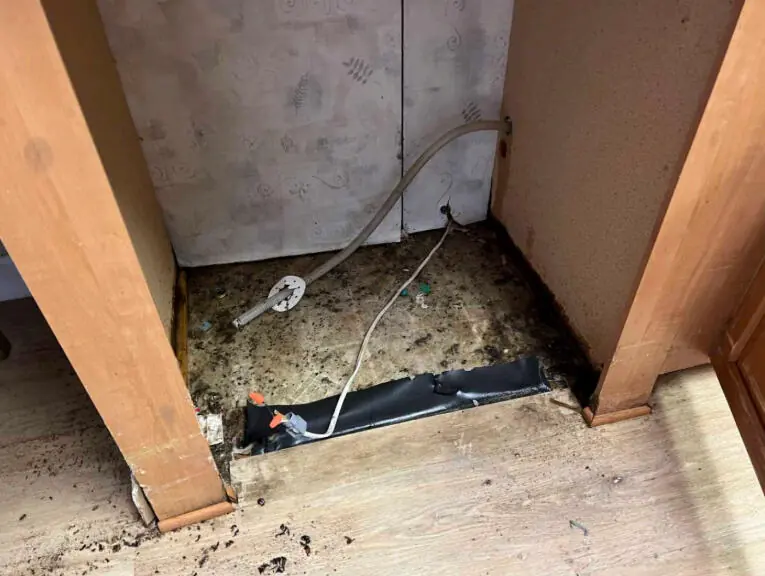
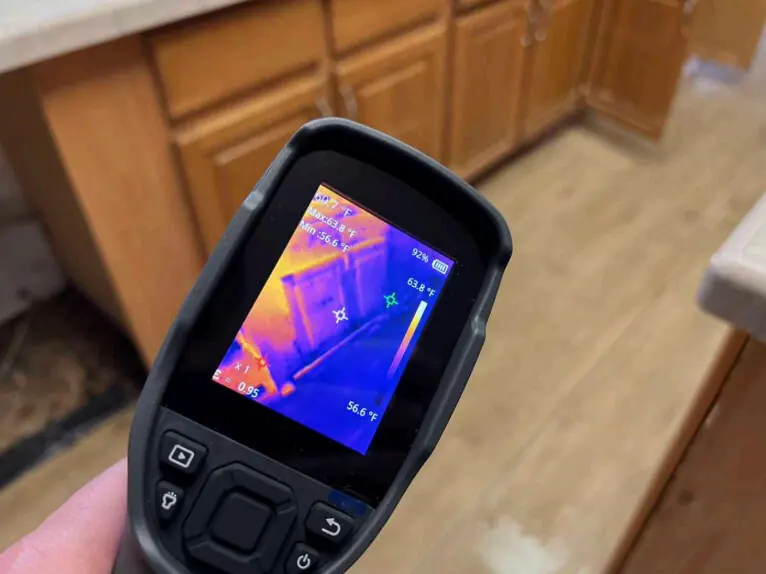
The lesson is that your first photos and your drying records are what let you answer a statement like that with facts. The Department of Insurance says mold damage caused by a covered peril may be covered under a homeowners policy, so ask your company what your policy says about mold when you report the loss. If you suspect mold after water damage, the Department tells you to contact your claims adjuster immediately.
Mistakes that cost homeowners money
- Waiting to report the loss. Your policy expects notice without unnecessary delay, and the Department of Insurance says to report right away.
- Throwing things out or tearing out before photos. The evidence goes into the dumpster with the debris.
- Making permanent repairs first. The Department of Insurance advises waiting until the adjuster has seen the damage.
- Letting drying slip. The longer materials stay wet, the more likely a mold dispute becomes.
- Treating the first payment as the final number. On the ceiling pipe claim we prepared a detailed rebuild estimate of $104,723.78, and the carrier's first payment was $57,223.67. An outside comparison estimate the carrier relied on had necessary repair items removed. After we documented what was missing, the carrier brought in a second vendor and issued a supplemental payment of $41,282.70, and rebuild payments reached 94% of our documented estimate.
When to call a public adjuster
You are not required to hire one, and a cooperative insurance company makes everything easier. A public adjuster tends to help when the damage is large, the estimate looks low, the claim is stalling or you do not have time to document and negotiate it all yourself. We work for you, not the insurance company, and we can step in at any point, including in the first days while the scope is still being set. Public adjusters cannot give legal advice, so if you think an insurer acted in bad faith, talk to an attorney.
These are burst pipe and supply line claims we have handled:
- Glendale: hot water dishwasher supply line burst, main floor and basement, $323,191.28 recovered.
- Lancaster: dishwasher supply line burst, a mold coverage dispute and an appraisal, $311,307.12 recovered.
- North Hollywood: copper pipe failure inside a bathroom wall, $203,051.00 recovered.
- Ceiling pipe burst and an altered comparison bid, $115,406.37 recovered.
Every claim is different and no result is guaranteed. If a pipe has just burst in your home, contact us for a free claim review or call (818) 918-3332. You can also read more about our water damage claims work and the areas we serve.
Frequently asked questions
What should I do first when a pipe bursts in my house?
Shut off the water at the valve on the failed line or at the main shutoff, and stay clear of any electrical hazards. Then call a plumber and your insurance company, photograph the damage before you clean up, and get water extraction and drying started. Keep every receipt and write down who you spoke to and when.
Does homeowners insurance cover a burst pipe in California?
Usually, when the water damage is sudden and accidental. The California Department of Insurance lists sudden and accidental water damage among the perils a homeowners policy generally covers, while flood is not covered. Slow, long term seepage is often treated differently, and every policy has its own limits and exclusions, so have yours reviewed.
Should I wait for the insurance adjuster before I start cleanup?
Do not wait to protect the property. Extracting water and starting drying equipment are reasonable emergency steps, and your policy expects you to limit further damage. Take photos first and keep the invoices. Hold off on permanent repairs, such as replacing flooring or cabinets, until the adjuster has seen the damage.
How fast can mold grow after a burst pipe?
The EPA says to dry water-damaged areas and items within 24 to 48 hours to prevent mold growth, and that in most cases mold will not grow if wet or damp materials are dried within that window. Materials that stay wet longer are more likely to develop mold, which is why drying is the most time-sensitive step.
Will insurance pay for a hotel or rent while my home is repaired?
If the home is not safe to live in, additional living expense coverage, also called loss of use, may pay the extra cost of living elsewhere. The California Department of Insurance advises keeping receipts for shelter, clothing and food. How much you get and for how long depends on your policy.
Do I have to use the contractor my insurance company suggests?
No. California's claims regulations say an insurer may not require you to have the property repaired by a specific individual or entity. You can use a company your insurer suggests, but the choice is yours. Whoever you hire, keep the invoice, the photos and the moisture readings with your claim file.
How long does my insurance company have to respond to a burst pipe claim?
In California an insurer generally has 15 calendar days to acknowledge a claim, 40 days to accept or deny it once it has proof of the claim, and 30 days to pay after it accepts. Our guide to California insurance claim deadlines explains the exceptions and what to do if a deadline is missed.
Do I need a public adjuster for a burst pipe claim?
You are not required to hire one. It tends to help when the damage is large, the estimate looks low, the claim is stalling or you do not have time to document and negotiate it yourself. A free review of your policy and estimate can tell you whether it makes sense for your claim.
Sources
- U.S. Environmental Protection Agency, A Brief Guide to Mold, Moisture and Your Home
- California Department of Insurance, Residential Property Claims Guide
- California Department of Insurance, Top Ten Tips for People Affected by Winter Storms
- California Insurance Code section 2071, standard form fire insurance policy
- California Code of Regulations, title 10, section 2695.9
This article is general information, not legal advice or a coverage opinion. Your policy and the facts of your loss decide what is covered.